Each semester the Department of Music presents visiting scholars who are leaders in their fields. All lectures are free to the public. For more information call 412-624-4125 or e-mail concerts@pitt.edu.
2026-27 Visiting Scholar Series
Fall 2026
Kwami Coleman
What's So "Free" About Free Jazz?
Friday, November 6, 1:30 PM
Frick Fine Arts Auditorium
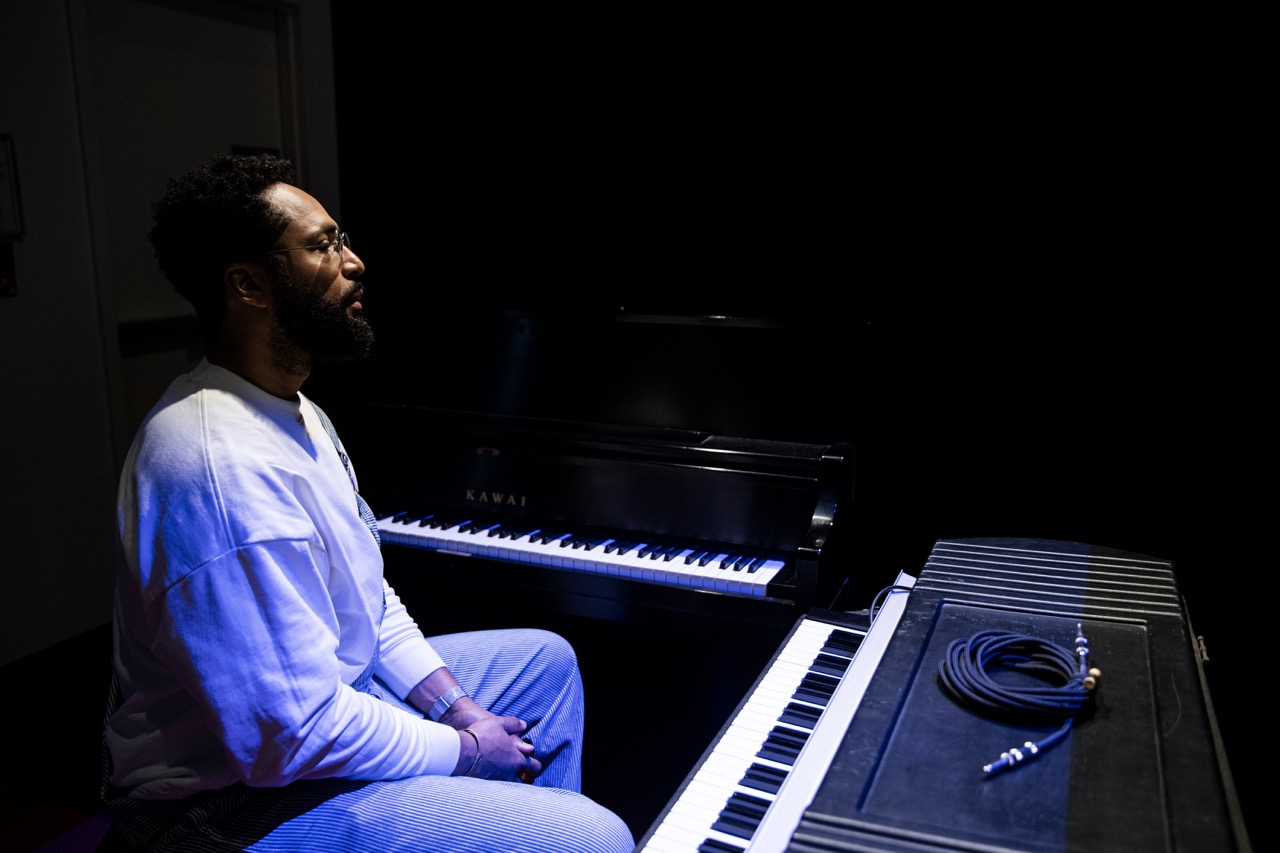
Abstract: Free jazz, the (sub-)genre of the United States' indigenous improvised music tradition, forged in the radical tumult of the 1960s, often evades specific definition. Assumptions and misconceptions about what the artists in question were pursuing—creatively, and even politically—underpinned reactions to new music at its inception, yet musicians, music scholars and educators today still may not grasp fully the sound, methods, and motivations behind free jazz. Similarly, jazz specialists may not be familiar with the aesthetics of free improvisation as practiced in that historical period, and how improvising musicians employ these techniques today in the twenty-first century.
This talk seeks to provide a clear understanding of these things by highlighting key recordings from the 1960s and of the last decade. What in the creative work of musicians like Ornette Coleman, Abbey Lincoln and Max Roach, Cecil Taylor, and John Coltrane in the 1960s made a music already synonymous with freedom even freer? Why was that freedom a problem for those who considered themselves gatekeepers of modern jazz? Where is free(r) improvisation today?
To answer these questions, I disambiguate some of the music’s reception and lore from the creative methods developed by improvising musicians at the center of a now overlooked (or unknown) controversy in postwar American music. Drawing from my recent book Change: The New Thing and Modern Jazz, my remaining goals are twofold: unpacking the experimental nature of the improvisatory practices of the 1960s (explicating them as abstract methods of collective improvisation) and contextualizing the fraught critical discourse around this experimental music among critics, musicians, and consumers that made up the modern jazz industry that subsumed these musicians. That free jazz, then called jazz’s “new thing,” could have been too free for its time serves as a poignant example of what happens when creative imperatives outpace aesthetic orthodoxy. Free jazz was also a territory forged by artists taking unapologetic risks in a chaotic and revolutionary moment: something that may be particularly salient for us today.
Bio:
Kwami Coleman is a musicologist, music creator, and an associate professor at the Gallatin School of Individualized Study, New York University. He researches and writes on improvised and experimental music, American music history, jazz history, music and the African Diaspora, music's political economy, music aesthetics, technology, and culture. He is a pianist and producer who creates solo and collaborative work with electronics, machines, and other human beings.
Coleman’s book, Change: The New Thing and Modern Jazz, published by Oxford University Press in Fall 2025, is a stylistic genealogy of the twentieth-century abstract music now referred to as free jazz, or jazz’s "new thing" as it was known in the early 1960s. In it he makes connections between how and why artists created this work, its cultural significances, and its complicated reception in the music press of the 1960s while providing readers with new ways to listen to and understand this innovative and disruptive music.
At Gallatin, Coleman teaches courses on American music history, music aesthetics, music and sound-based improvisation, and Black Music. He has, as a composer, premiered commissioned work for the Studio Museum of Harlem, Maysles Documentary Center, and the March on Washington Film Festival and continues to perform internationally. Currently, Coleman is at work on several recording projects following his 2017 full-length album Local Music.
Spring 2027
Noriko Manabe
Details TBA
Anicia Timberlake
Details TBA